Supply pipe leak detection equipment
Seven instruments do the work on a buried supply pipe. Each has something it is better at than anything else in the van, and each has a point where it becomes useless. Both halves are below.
0333 567 2637Seven days a week, 7am to 9pm. Fixed price agreed before anyone travels.
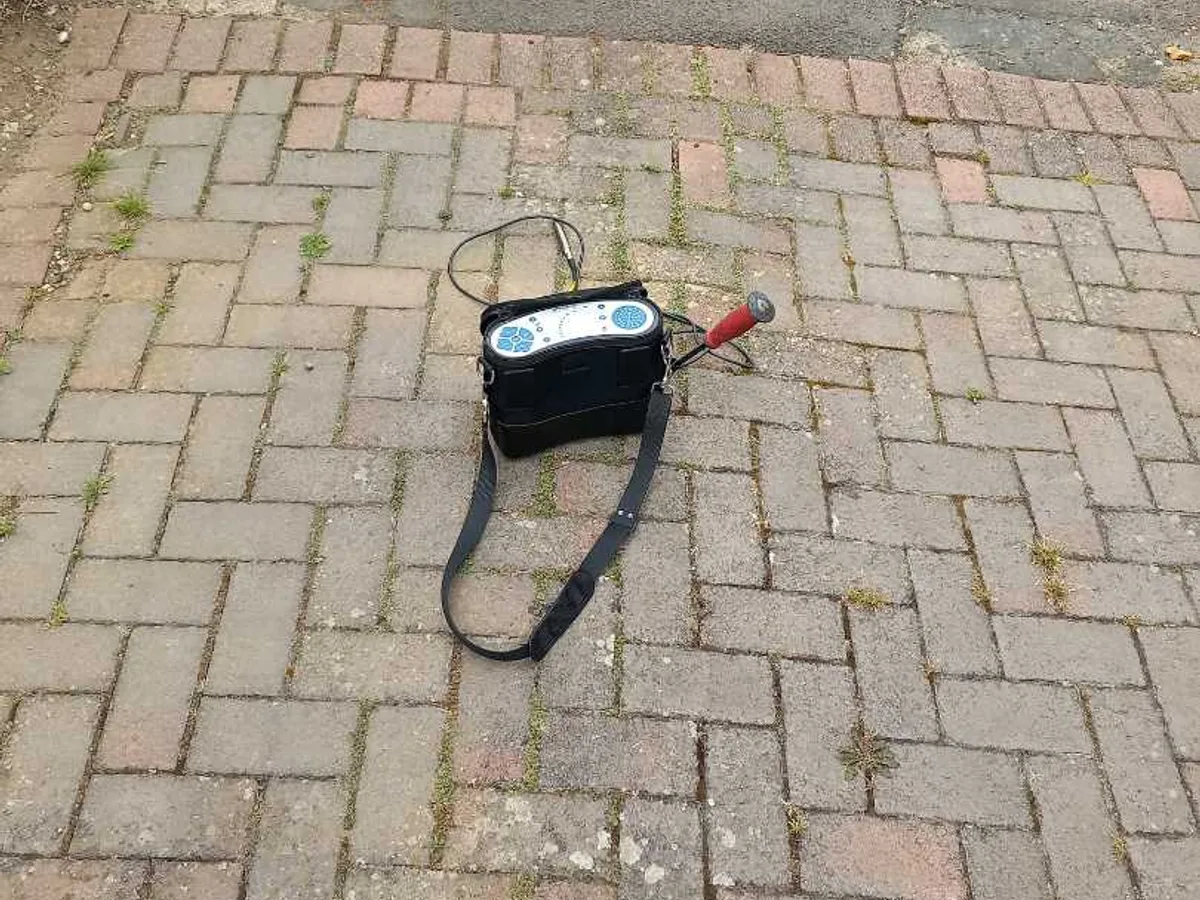
Acoustic ground microphones
A very sensitive microphone on the ground, listening for the sound of water escaping under pressure.
How it works
Water forcing its way out of a pressurised pipe makes a noise, and that noise travels along the pipe wall and up through the ground. A ground microphone is placed on the surface above the pipe run and moved along it. The point where the sound is loudest is the point the engineer digs.
What it is best at
Paved and hard surfaces such as a drive or a path, where sound carries cleanly and the pipe run is known.
Where it stops working
Traffic, a running appliance, wind and soft deep soil all bury the sound. A very slow weep may make almost no noise at all, which is why listening alone is rarely the whole job.
Tracer gas
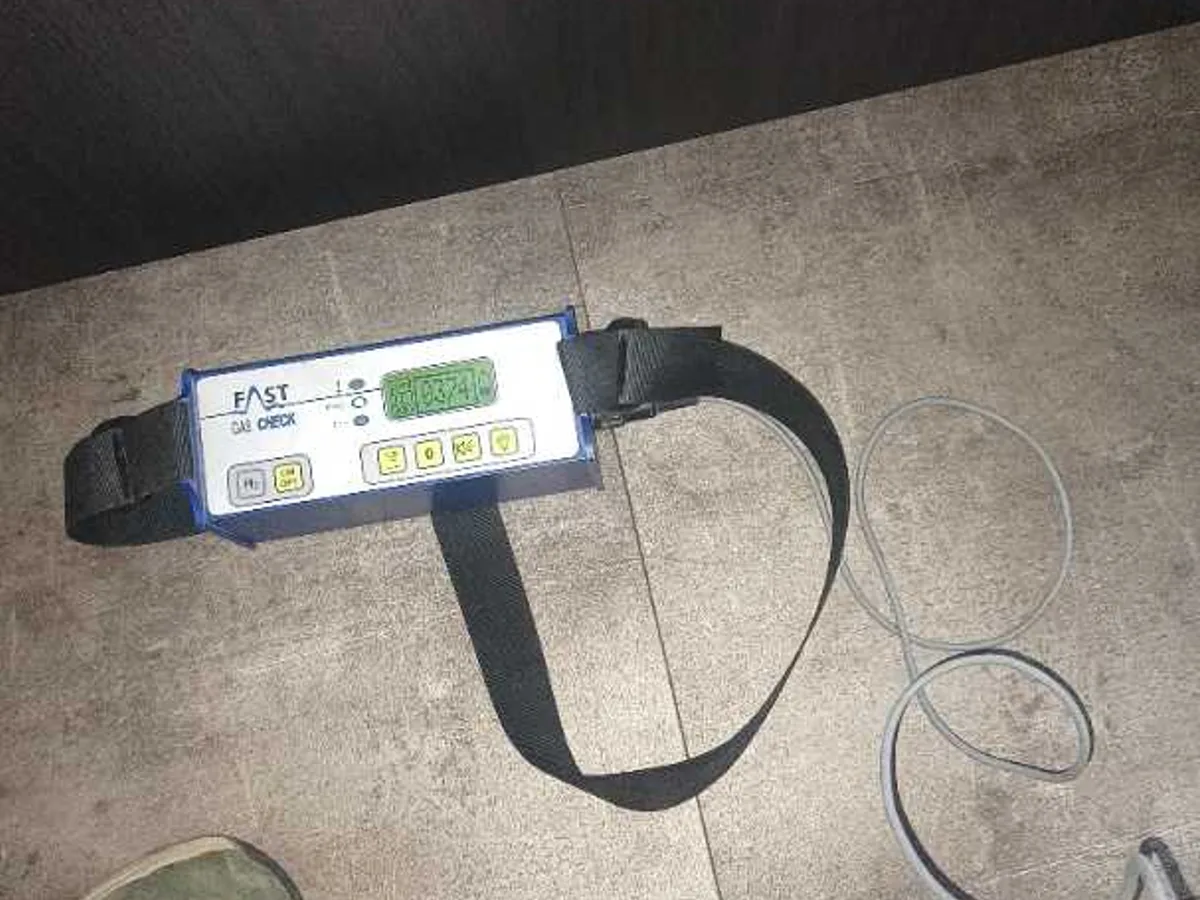
A harmless gas put into the empty pipe, which escapes at the leak and is sniffed out at the surface.
How it works
The pipe is drained and filled with a mixture of hydrogen and nitrogen. The gas is far lighter than air, so it leaves through the fault and rises straight up through soil, sand, concrete and block paving. A detector is walked over the ground above the pipe until it reads.
What it is best at
Pinpointing. Where listening narrows a leak to a few metres, gas usually narrows it to a spot small enough to open up with a spade.
Where it stops working
The pipe has to be emptied first, which means the water is off for part of the visit. On a long run under a sealed surface the gas can take time to reach the top.
Leak noise correlation
Two sensors clamped to the pipe, and a calculation that turns the delay between them into a distance.
How it works
The same leak noise reaches two sensors at slightly different moments. The correlator knows how far apart the sensors are and how fast sound travels through that pipe material, so it converts the delay into a distance along the pipe from each end.
What it is best at
Long runs. A supply pipe crossing a field, a shared drive or a large garden is exactly the case where walking the whole length with a microphone is impractical.
Where it stops working
It needs two points of contact with the pipe, and it needs the pipe material and length to be known. Plastic carries sound far less well than metal.
Pressure testing
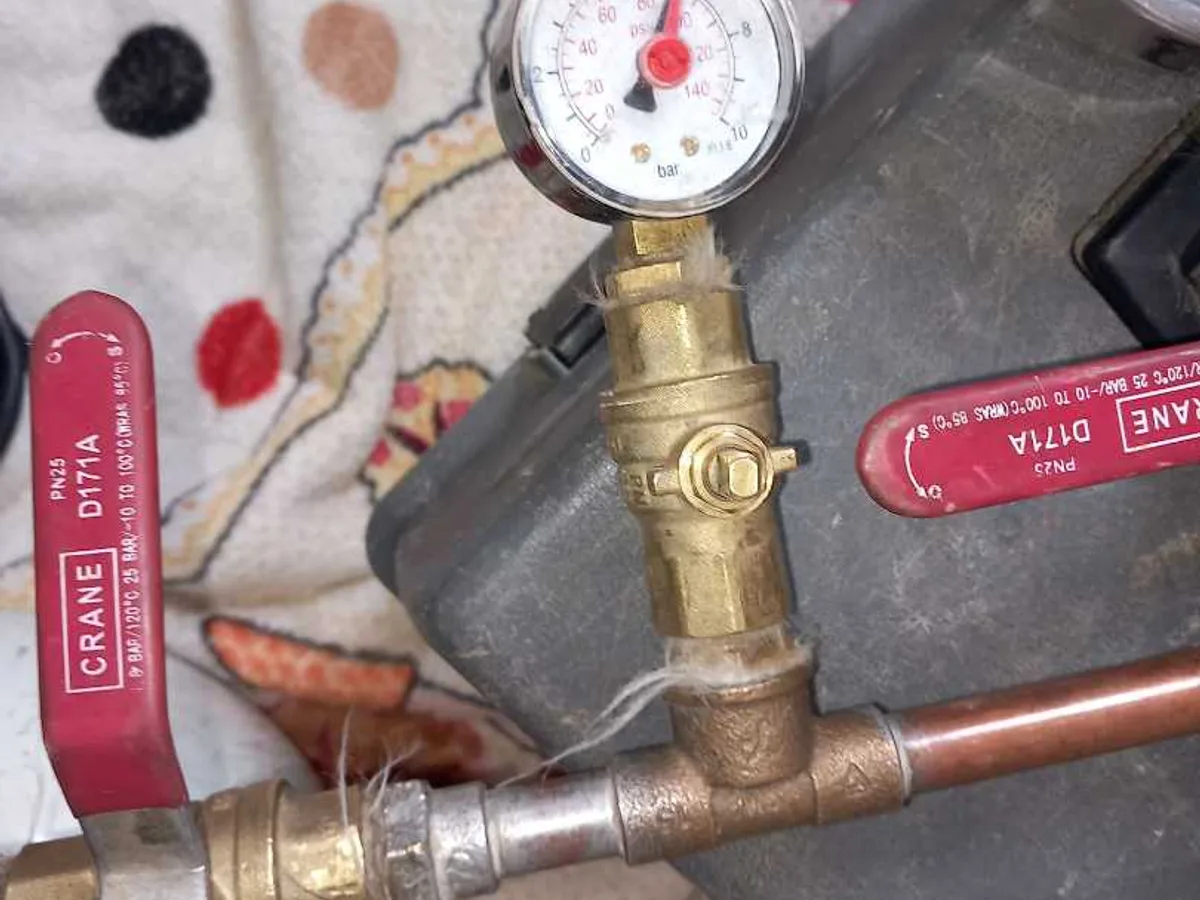
Sealing a section and watching a gauge, to prove which part of the system is losing water.
How it works
A section of pipework is isolated and brought up to a set pressure with air or water, then held and watched. A section that holds is intact. A section that falls is the one with the fault, and the search narrows to it.
What it is best at
Ruling things out, which is most of the work. On the Grantham job the inside of the house was held at 5.5 bar for thirty minutes without losing anything, which moved the whole search outdoors before a single slab was lifted.
Where it stops working
It proves which section, never which metre. Pressure testing on its own has never found a leak.
Thermal imaging
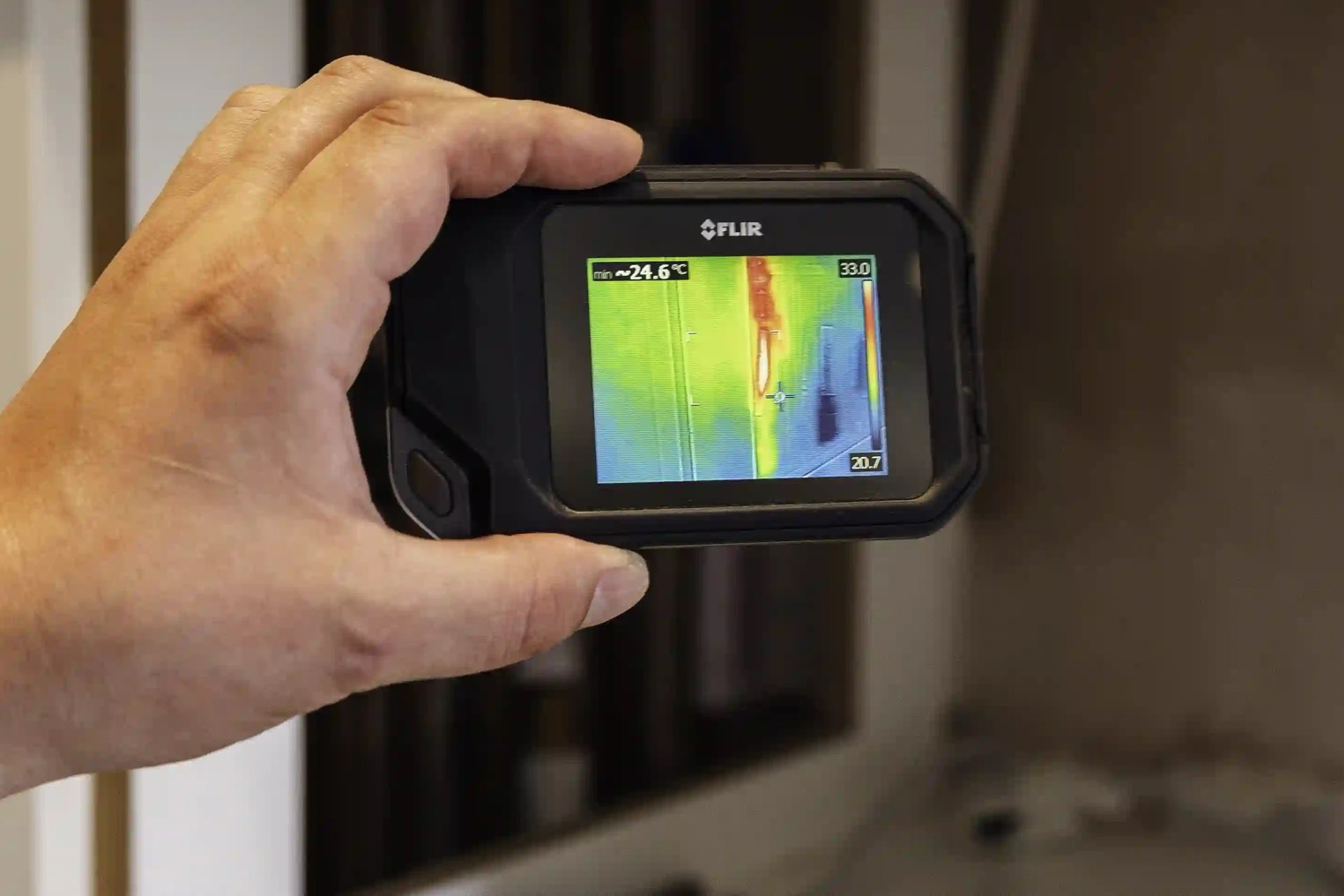
A camera that reads surface temperature, showing where cold water has spread.
How it works
Escaping mains water is colder than the ground and the building around it. A thermal camera turns those small temperature differences into an image, which maps the spread of water and often shows the line of the pipe itself.
What it is best at
The first minutes of a visit, and anywhere water has come inside. It shows how far the water has travelled, which is usually further than the damp patch suggests.
Where it stops working
It reads surfaces, not depth. Sun on a driveway, underfloor heating and a recently used shower all produce patterns that look like a leak and are not.
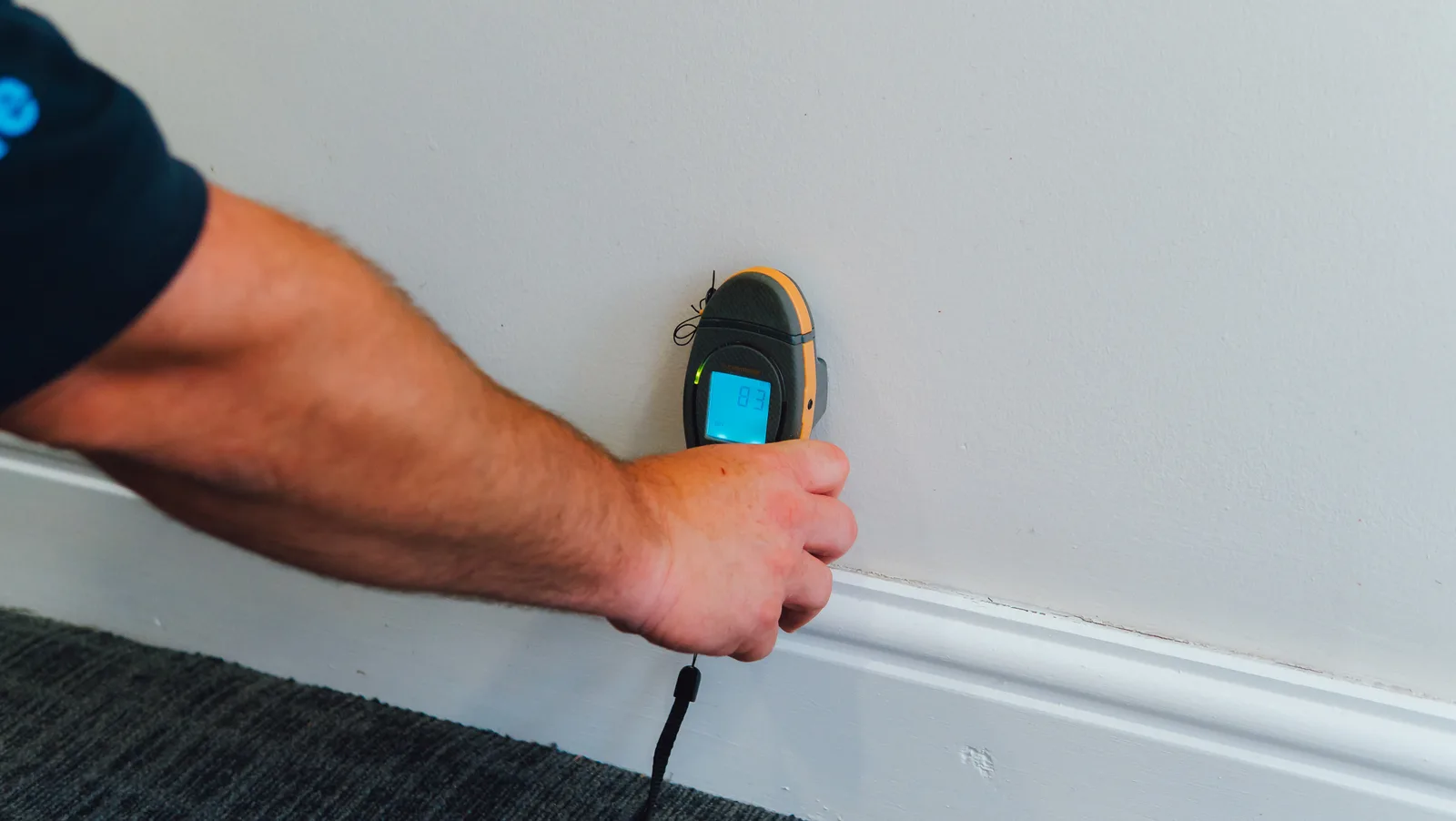
Moisture and damp meters
Pin and pinless meters that measure how wet a wall or floor actually is, point by point.
How it works
Dry building material resists an electrical current; wet material does not. Taking readings across a wall or floor and writing them down builds a moisture map, and the wettest reading is the end of the trail nearest the source.
What it is best at
Turning a vague damp patch into a direction of travel, and proving afterwards that an area is drying rather than still being fed.
Where it stops working
Salts in old plaster and a metal mesh behind it both read as damp. A reading is one piece of evidence to weigh with the rest, and on its own it settles nothing.
Borescope camera
A camera on a flexible tube, pushed through a small hole to look inside a void.
How it works
A camera roughly six millimetres across, with its own light, goes down a tube into a cavity, a duct or the space under a floor. The engineer watches a live picture instead of taking the floor up to see.
What it is best at
The last step before opening anything, where the search is already down to a small area and the question is what is behind the surface.
Where it stops working
It only sees where it is pointed. It confirms a leak that has already been located; it does not search for one.
What none of it does
No instrument here sees through the ground. Every one of them measures a consequence of the leak: a noise, a gas that got out, a temperature difference, a pressure that fell. The skill is in knowing which consequence is available at this property, on this pipe, in this weather.
That is also why the survey runs in a sequence rather than reaching for one machine. Two independent methods agreeing on a square metre is the standard that turns a survey into a small hole.
Ask what we would use at your property
Tell us what is on top of the pipe run and how old the house is. That decides which of these does the work and how long the visit takes.
The office team speak to every customer before an engineer is booked, and the engineer who attends is the one who writes the report.
Seven days a week, 7am to 9pm
England, Scotland and Wales. £5 million public liability insurance.